8 Signs Your Tree Needs to Come Down
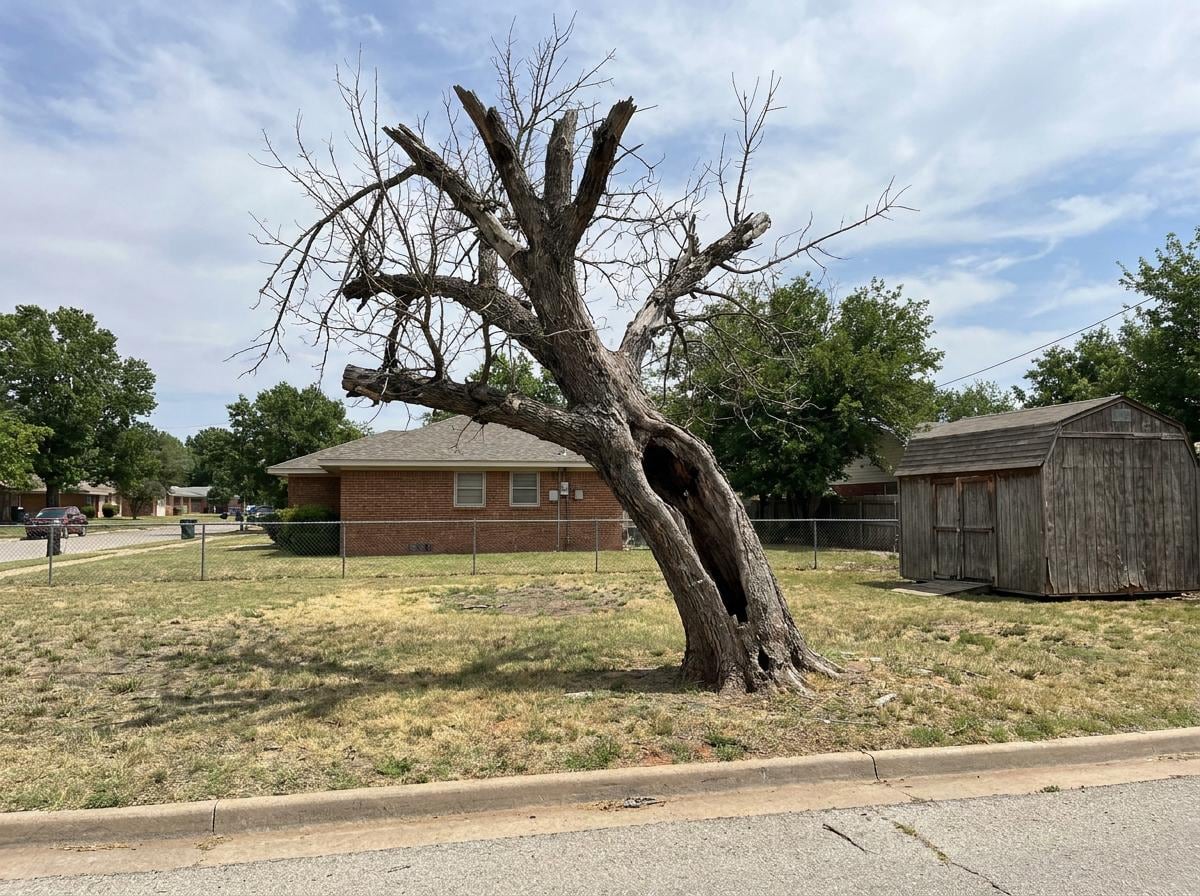
A dead or dying tree is a $5,000-$20,000 mistake waiting to happen. Roof damage, fence destruction, injury, car damage — and homeowner's insurance often refuses to pay if they can prove the tree was visibly compromised before it fell. Here's how to tell when it's time.
1. Large dead branches in the crown (deadwood)
A few small dead twigs are normal. But if 25% or more of the upper canopy is dead, the tree is in decline. "Widow-makers" — large dead branches still attached high in the tree — are an immediate hazard. They can drop without warning in any wind event.
2. Mushrooms or fungal conks at the base or on the trunk
This is the big one. Mushrooms growing out of the trunk or root flare mean the wood is decaying inside. The tree might look fine on the outside but be hollow at the core. Bracket fungi — large, shelf-like growths — are especially bad news. Once you see them, the tree is structurally compromised.
3. Cracks running vertically up the trunk
Deep splits — not just bark texture — mean the tree is structurally compromised. Especially dangerous on large oaks and pines. A crack that wraps around or extends more than a few feet up the trunk is a removal indicator.
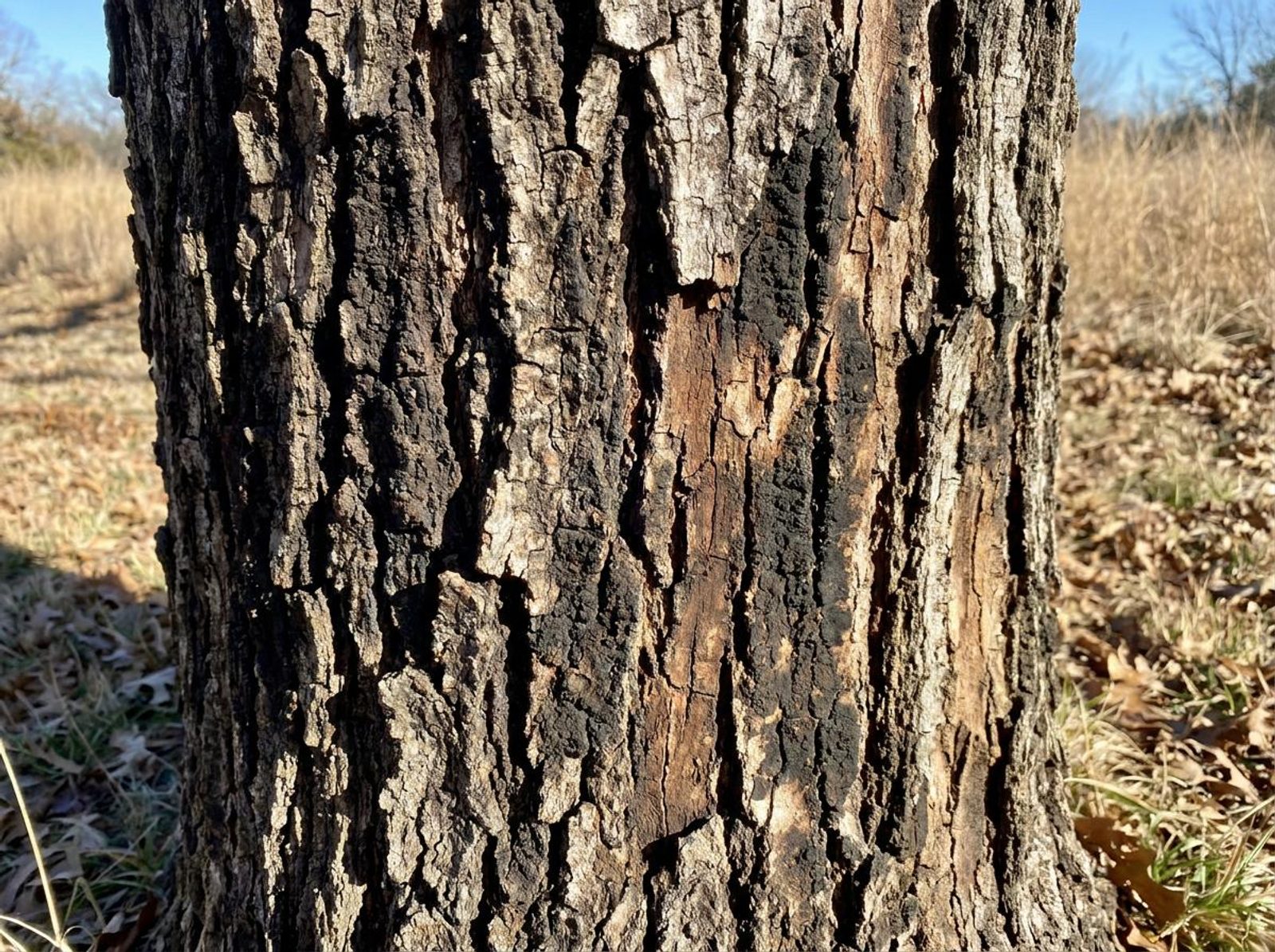
What to look for in Tulsa specifically: Post oaks and blackjack oaks in northeast Oklahoma are particularly prone to two trunk issues — frost cracks (vertical splits from rapid winter temperature swings) and Hypoxylon canker (a stress-driven fungus that produces black, crusty bark patches). A frost crack alone might heal; combined with active canker fungi and crown dieback, the tree is on a fast track to failure.
4. New lean (or worsening existing lean)
A tree that's always leaned the same way is usually fine. A tree that's leaning MORE than it used to — or where the soil around the base is bulging/lifting on the opposite side — is rotating and going to fall. Same goes for a tree with exposed roots on the upslope side. The root plate is failing.
5. Heavy limb loss after every storm
If your tree drops major limbs in every thunderstorm, it's telling you the wood is weak. This usually accelerates fast — within a year or two, what was occasional limb loss becomes whole-tree failure.
6. Root damage from construction or excavation
Recent excavation within 10 ft of the trunk (driveway work, foundation work, utility trenching) often kills trees 1-3 years later. Same for root rot caused by long-term soil saturation, septic leaks, or grade changes that buried the root flare.
7. Hollow or soft trunk
Tap the trunk with a hammer. A solid tree returns a sharp "tock." A hollow tree returns a dull "thud." If you can push a screwdriver more than ½ inch into the trunk anywhere, the wood is rotting. Trees can survive surprisingly long with some hollow space — but when the wall thickness drops below about 1/3 of the trunk diameter, failure risk goes up dramatically.
8. Pest infestation
Emerald ash borer (now active in eastern Oklahoma), bark beetles, and carpenter ants are all bad signs — especially when combined with crown thinning or oozing sap. Most pest-related decline is irreversible by the time it's visible.
When in doubt: get a free certified arborist assessment
A 15-minute visit from a certified arborist can tell you whether a tree is safe, treatable, or needs to come down. We offer free assessments across the Tulsa metro — no pressure, no upsell. If the tree can be saved with disease treatment or selective pruning, we'll say so.
Call (918) 359-5928 for a free assessment.
Related
Worried about a tree on your property?
Free arborist assessment. We'll tell you straight whether it needs to come down.